
Building a Smarter Drill Tool Retirement Routine
A worn drill tool may have reached the end of its working life, but that does not necessarily mean it has reached the end of its material value.
For mining and drilling operations, a clear drill tool retirement routine can help separate end-of-life equipment from general scrap, preserve useful information about each material stream and make future assessment easier. Instead of allowing worn tools to accumulate without a plan, businesses can create a simple process for identifying, storing and reviewing them once they are removed from service.
Why a Retirement Routine Matters
Drilling operations can generate worn equipment continuously.
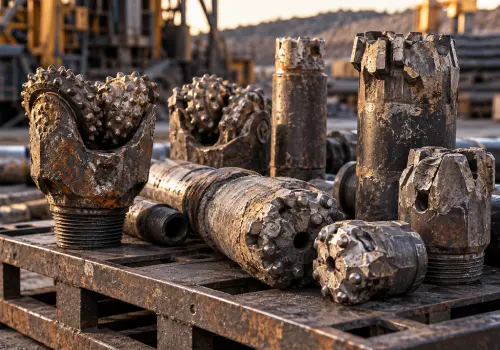
Depending on the operation, this may include DTH drill bits, tricone bits, PDC drill bits, drill rods, reamers, raise bore cutters and other tungsten-containing tools or components.
Tungsten & Superalloy Recyclers confirms that it purchases these types of drilling materials, subject to assessment. Complete steel-bodied drill bits containing tungsten carbide can also be considered, so every tool does not necessarily need to be dismantled before it can enter a recovery stream.
A defined retirement process helps prevent these materials from simply disappearing into a general scrap pile.
Decide What Happens When a Tool Leaves Service
The best time to organise worn tooling is when it is removed from operation.
At that point, site personnel are more likely to know what the tool is, where it came from and why it was replaced. If it is left unidentified for months, that information may be much harder to recover later.
A basic internal routine could record:
- equipment or tool type
- work area or drilling activity
- date removed from service
- known manufacturer or part number
- known material information
- condition
- approximate quantity
- storage location
Not every operation needs a complex tracking system.
The goal is simply to retain useful information while it is still readily available.
Keep Different Tool Categories Organised
Drilling equipment can vary significantly in construction, material content and condition.
For that reason, clearly different tool types should not automatically be treated as one identical scrap stream.
A practical storage system might distinguish between:
- DTH drill bits
- tricone bits
- PDC drill bits
- drill rods
- reamers
- raise bore cutters
- separated tungsten carbide
- complete steel-bodied tools
- other tungsten-bearing drilling components
These categories can be adjusted to match the actual equipment used by the operation.
The purpose is not to create unnecessary administrative work. It is to preserve meaningful distinctions that may matter later during material assessment.
Do Not Assume Worn Means Worthless
Mining equipment is designed to perform under demanding conditions, so worn tools can look heavily damaged by the time they are retired.
That appearance alone does not tell you whether the remaining material has recoverable value.
Tungsten carbide, for example, is commonly used in high-wear industrial applications because of its hardness and wear resistance. In the context of this business, tungsten carbide can be present both as separated material and within complete drilling equipment.
The condition of the material is one factor considered during assessment, but it is not the only one.
Confirmed valuation factors include:
- composition
- tungsten content
- condition
- grade
- quantity
That is why an assessment is more useful than deciding internally that a worn component has no value simply because it is no longer fit for service.
Keep Complete Tools Intact When Appropriate
Operations should not assume that every tungsten-containing tool must be stripped apart before speaking with a specialist buyer.
Tungsten & Superalloy Recyclers confirms that it purchases complete steel-bodied drill bits containing tungsten carbide as well as separated tungsten carbide. These material forms may be valued differently, but both can fall within the company’s purchasing scope.
That distinction can save businesses from creating unnecessary processing work simply because they assume separation is always required.
If your team is unsure whether a complete tool should be processed further, it can be more practical to have the material assessed first.
Create a Dedicated End-of-Life Storage Area
One of the easiest ways to improve worn drilling tool management is to give retired tools a designated destination.
Without a defined storage point, materials can become scattered across workshops, yards or operating areas.
A dedicated location can make it easier to:
- keep retired tools separate from usable stock
- prevent different material streams from being mixed unnecessarily
- estimate accumulated quantities
- take photographs for assessment
- retain labels and identifying information
- plan future material reviews
Storage methods should always follow the site’s own safety, environmental and handling requirements.
The aim is operational clarity rather than creating a one-size-fits-all storage rule.
Review Retired Material at Practical Intervals
A retirement routine works best when material is reviewed periodically instead of being forgotten.
The right interval will depend on the volume generated by the operation.
A high-activity drilling site may accumulate material quickly, while another operation may need longer before there is a meaningful quantity to assess.
Rather than setting an arbitrary schedule, businesses can review retired tooling when:
- a designated storage area begins filling
- a drilling campaign is completed
- equipment fleets are changed
- maintenance shutdowns occur
- a stocktake identifies accumulated material
- enough material exists to justify assessment
This turns material recovery into part of normal operational planning rather than an occasional clean-up exercise.
Make the Routine Work Across Multiple Sites
A consistent system becomes even more valuable when a business operates across several locations.
If each workshop or mine site uses completely different terminology and storage practices, consolidating material later can become unnecessarily difficult.
A shared approach to drilling consumables recovery can establish common categories and minimum information requirements while still allowing each location to work within its own operating conditions.
This is particularly relevant in Western Australia’s mining regions.
Tungsten & Superalloy Recyclers has confirmed operational purchasing coverage involving Perth, the Pilbara and the Goldfields, as well as broader Australian purchasing capability. The business also states that it can purchase from remote mine sites, drilling operations and industrial facilities.
For businesses operating across regional Western Australia, consistent material management can make later discussions much easier.
Treat Retired Tools as a Managed Material Stream
The biggest improvement may simply be changing how end-of-life equipment is viewed.
A worn drill bit does not need to remain in the same category as general workshop waste.
When retired tools are identified, segregated and recorded consistently, businesses gain a clearer picture of what they are generating over time.
That information can help maintenance teams understand accumulated material, help procurement and site personnel organise future assessments and reduce the chance that potentially valuable material becomes mixed or forgotten.
A good drill tool retirement routine does not need to be complicated.
It only needs to be clear enough that everyone knows what happens when a tool leaves service.
Have Retired Drilling Tools Ready for Assessment?
If your operation has accumulated worn drill bits, drill rods, reamers, cutters, tungsten carbide or other tungsten-bearing drilling equipment, Tungsten & Superalloy Recyclers can discuss whether the material falls within its purchasing scope.
The business purchases both complete tungsten-containing equipment and separated material, with confirmed coverage extending through Perth, the Pilbara, the Goldfields and other parts of Australia.
A simple retirement routine can make that process easier by keeping your material organised, identifiable and ready for a more informed assessment.